
Smart Boat Upholstery Material Choices That Make Boat Ownership Easier
A boat interior needs to work hard. Seating can face sunlight, moisture, saltwater, dirt, and repeated use while still providing a comfortable place for passengers to relax. For owners planning an interior refresh, material selection can therefore be just as important as color or design. The right boat upholstery material can make seating easier to maintain while improving its appearance and long term performance. Boat Upholstery Broward specializes in professional upholstery for boats and yachts, helping owners restore worn seating and create custom marine interiors.
Think About Daily Use First
Before choosing upholstery, owners should consider how they actually use the boat.
A vessel used every weekend will experience different wear from one used only a few times each year. Fishing, family cruising, watersports, and entertaining can also place different demands on seating.
Consider:
- Passenger traffic
- Typical trip length
- Exposure to sunlight
- Water exposure
- Cleaning frequency
- Storage conditions
These details can help narrow down suitable material options.
Exterior Seats Need More Protection
Cockpit and bow seating often face the toughest conditions.
Direct sunlight can affect surfaces, while rain and spray introduce moisture. Frequent passenger movement can also increase abrasion.
A boat upholstery material intended for demanding marine use can help exposed seating maintain its appearance and function.
Protective covers can provide another layer of protection when the boat remains at the dock.
UV Resistance Can Extend Visual Appeal
Sunlight does not simply make upholstery warmer.
Continuous UV exposure can gradually cause fading and surface deterioration. This can become particularly noticeable on seats that receive direct sunlight throughout the day.
Choosing materials with strong UV resistance can help reduce these effects.
Owners can also limit exposure by covering seating between trips whenever practical.
Water Is Only Part of the Moisture Problem
Marine seating naturally encounters water, but moisture can also come from wet clothing, spills, and humidity.
Cushions should dry thoroughly after exposure. Enclosed seating areas should also receive adequate ventilation.
A suitable boat upholstery material can help manage normal moisture exposure, but good maintenance remains essential.
Foam Determines How Comfortable a Seat Feels
Upholstery provides the visible surface, but foam provides much of the support.
Older foam can become compressed and uneven. Passengers may notice reduced comfort even when the exterior covering still appears acceptable.
During an upholstery project, owners should inspect the cushioning underneath.
Replacing deteriorated foam together with the covering can create a much more complete improvement.
Choose a Design That Fits the Vessel
A boat interior should feel connected to the rest of the vessel.
Classic boats may look best with traditional colors and simple piping. Modern cruisers can support cleaner lines, contrasting panels, and contemporary textures.
Color choices can include:
- White
- Cream
- Beige
- Light gray
- Navy
- Charcoal
A versatile boat upholstery material can support different design directions without compromising marine performance.
Texture Can Hide Everyday Wear
Some textures offer more than visual appeal.
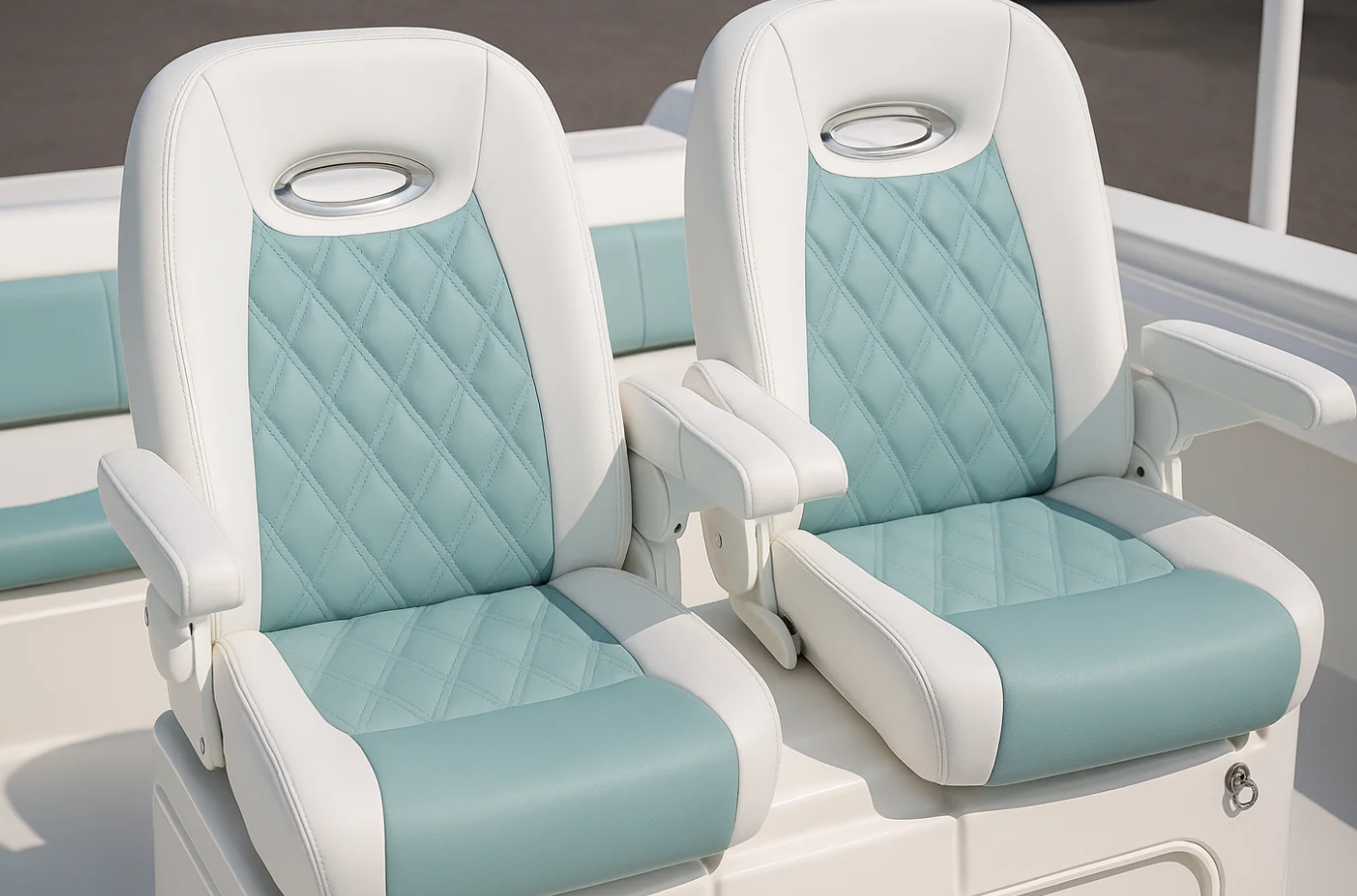
Subtle surface patterns can make minor marks and everyday wear less noticeable than completely smooth surfaces. They can also add depth to larger cushions.
This makes texture worth considering for boats that receive heavy passenger use.
Easy Cleaning Saves Time
Boat owners already have plenty of maintenance tasks.
An upholstery surface that is easy to clean can make routine care simpler. Food, sunscreen, salt, drinks, sand, and dirt should be removed promptly.
Owners should follow the manufacturer’s recommendations and avoid aggressive cleaning products that may damage the surface.
Regular care can help preserve the appearance of a boat upholstery material over time.
Small Design Details Create a Custom Look
A boat does not need an elaborate renovation to feel personalized.
Contrast piping can emphasize cushion edges. Decorative stitching can add character. Two-tone panels can create a modern appearance.
Custom embroidery can also personalize seating without changing the entire interior.
These details can produce a significant visual improvement with a relatively focused project.
Helm Seating Deserves Regular Inspection
The helm often becomes one of the most heavily used areas onboard.
Operators may spend hours in the same seat, exposing it to both passenger movement and sunlight.
Look for:
- Cracked surfaces
- Faded sections
- Loose stitching
- Flattened foam
- Damaged piping
Addressing these problems early can reduce the chance of more extensive damage.
Covers Protect More Than Appearance
A fitted cover can reduce exposure to sunlight, rain, and debris.
This matters even when the boat remains unused for several days.
However, owners should never cover wet seating for extended periods. Dry cushions and adequate airflow should remain part of the storage routine.
When Should You Reupholster?
Minor damage may require only a repair.
A small tear, loose seam, or isolated damaged section can often receive targeted attention. More extensive cracking, fading, deteriorated foam, or repeated seam failures may justify complete reupholstery.
Owners should compare the condition of the existing seating with the expected cost and lifespan of continued repairs.
Quality Installation Matters
Material quality cannot compensate for poor installation.
Accurate measurements, properly fitted covers, strong seams, and careful finishing all affect the final result.
Professional installation can help ensure that the selected boat upholstery material works correctly with the existing seating structure.
Plan for the Long Term
The best upholstery decision is rarely based only on what looks impressive on the day of installation.
Owners should consider how the seating will perform after hundreds of hours on the water.
A durable material, supportive foam, suitable design, protective storage, and consistent maintenance can work together to extend the useful life of a marine interior.
Final Thoughts
Good boat upholstery should make ownership easier, not more complicated. The right materials can improve comfort, simplify cleaning, protect the underlying cushioning, and give a vessel a more attractive interior.
Choosing a suitable boat upholstery material requires attention to the boat’s location, usage, exposure, maintenance routine, and design. When these factors guide the decision, owners can create seating that performs reliably while remaining comfortable and attractive for many seasons.